
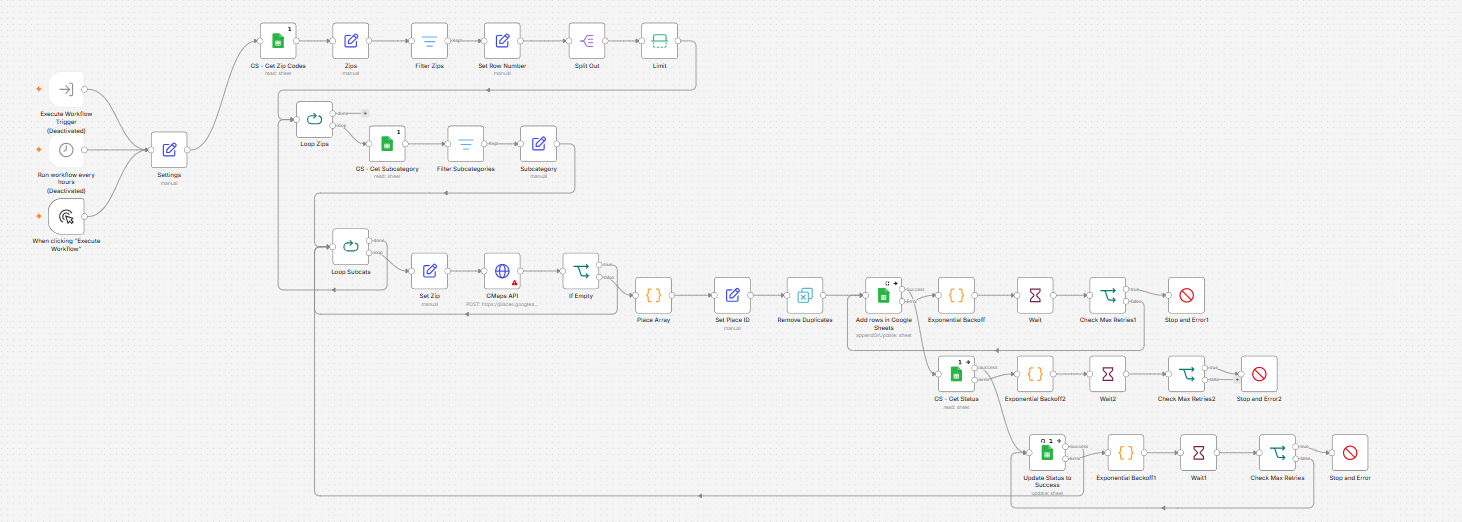
Google Maps Lead Engine, Local Business Prospecting
A prospecting workflow that harvests local business listings by category and area, deduplicates them and delivers a clean, contactable list.
Business process automation we have built and run in production: lead generation, research, reporting and content pipelines. Hover any card to watch the workflow rebuild itself, node by node.
Selected work
Workflows that remove the copy-paste work between tools, running on schedule or on trigger, without anyone remembering to start them.
A prospecting workflow that harvests local business listings by category and area, deduplicates them and delivers a clean, contactable list.

A scraping pipeline pulling prospects from several sources into one enriched sheet, with validation that keeps dead records out of the pipeline.
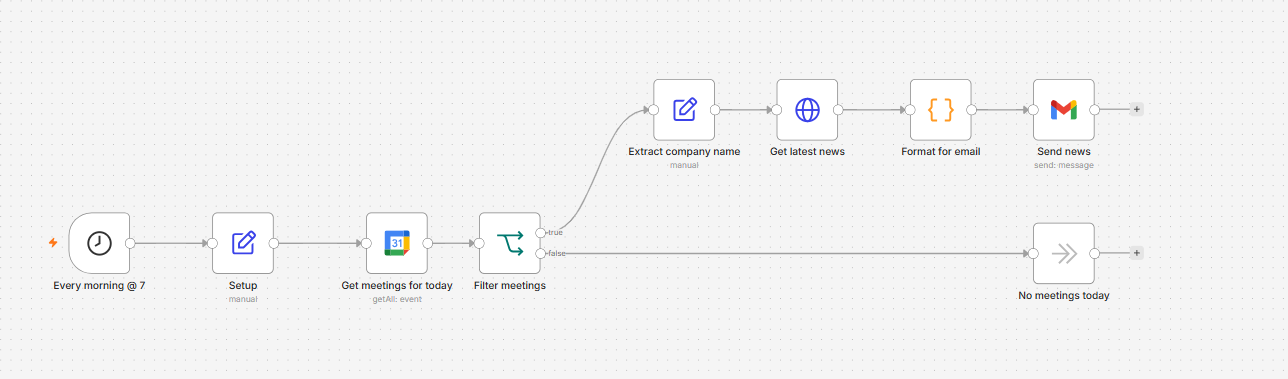
An automation that researches a company ahead of a scheduled call and posts a short, summarised brief to Slack before the meeting starts.
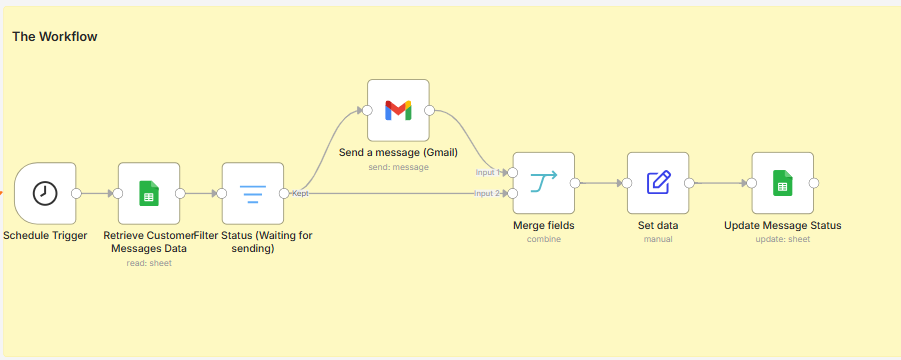
A sending workflow that drives personalised Gmail campaigns straight from a spreadsheet, with per-row merge fields and send-status write-back.
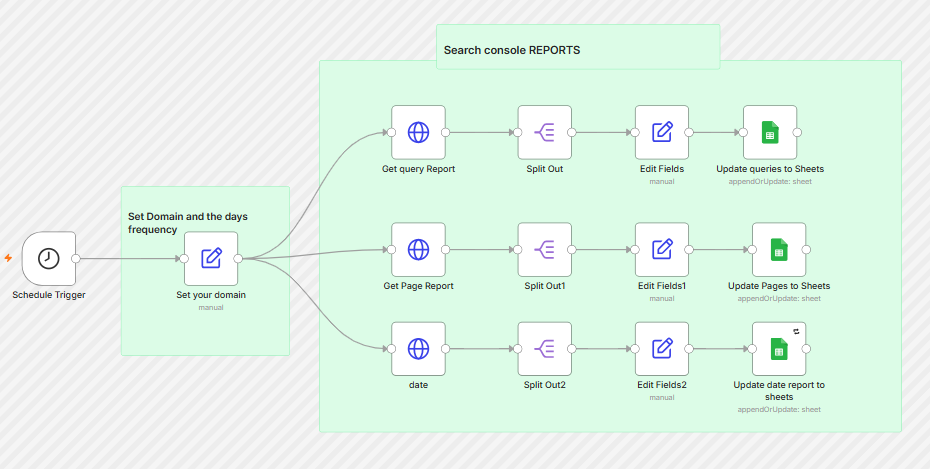
A scheduled export moving Search Console performance data into Sheets, so reporting builds itself instead of being rebuilt every month.
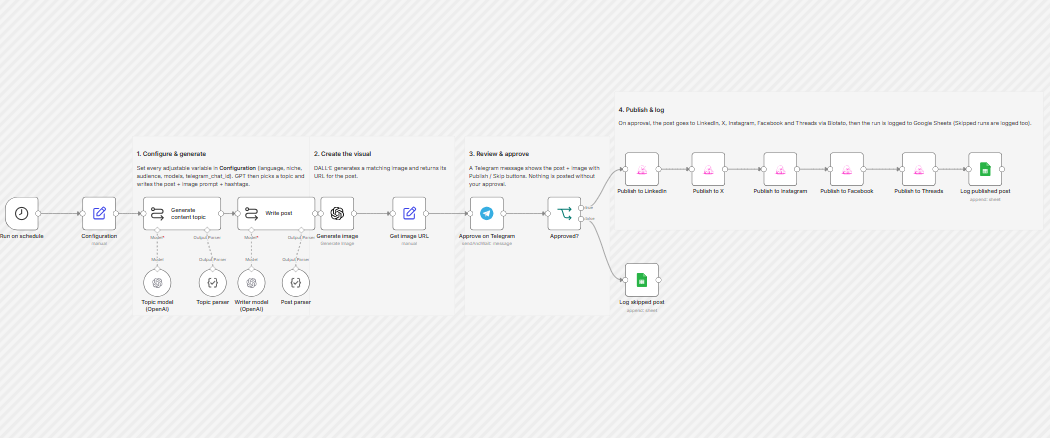
A content pipeline that drafts social posts with AI, routes them to Telegram for human approval and publishes only what has been signed off.
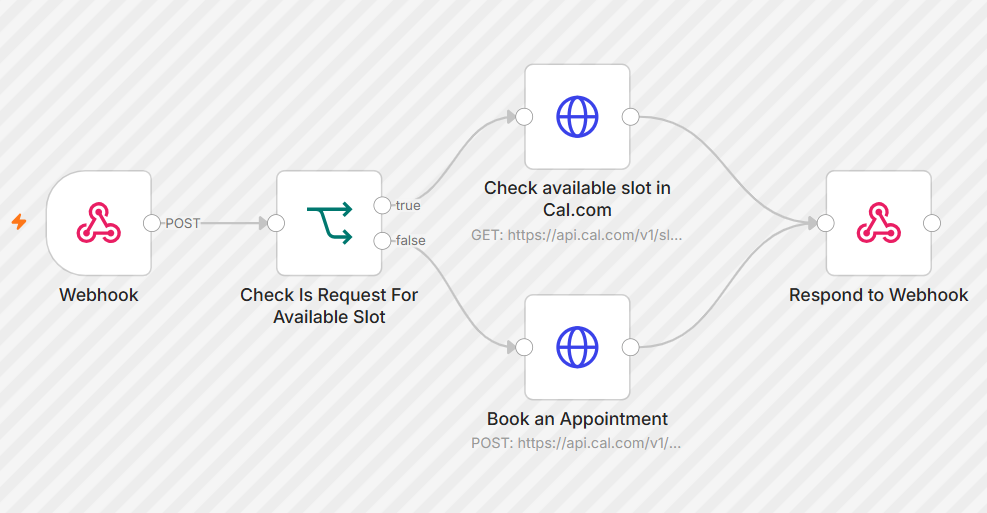
A webhook-driven booking service that checks live availability and reserves the slot, exposing scheduling to any channel that can call an API.
A selection of ai automation work. Detailed case studies, metrics and references are shared on request.
Methodology
The methodology behind every engagement, from first workshop to the retainer that follows launch.
We shadow the work, measure volume, handling time and error rate, and rank candidates by hours saved against effort to build.
Workflow logic, exception paths, approval gates and confidence thresholds agreed and written down before anything is automated.
The automation is built and connected to your systems, with structured logging and monitoring wired in from the first commit.
It runs alongside the manual process and we compare outputs case by case, so accuracy is proven with your data before anyone relies on it.
Staged switch-over with a manual fallback available throughout, then a measured comparison against the baseline from the audit.
Alerting on failures and silent stalls, change handling when upstream systems move, and the next process on the ranked list.
Common challenges
The problems clients usually arrive with, and how each one gets handled.
The audit is deliberately standalone. You get measured handling times and a ranked opportunity list, and if the numbers do not justify building anything, we will say so.
Nothing ships as an unchecked decision-maker. Extractions carry confidence scores, low-confidence cases route to a human queue, and the shadow-run phase proves accuracy before cutover.
No. Automation usually sits between the systems you already run. Where a tool has no usable API we build a middleware layer around it rather than replacing it.
Monitoring alerts on failures and on workflows that go silently quiet. On a partner engagement, handling those changes is part of the arrangement.
Every workflow has a pause control, a manual override and the ability to reverse or reprocess a run. Automation should remove work from your team, never authority.
Point us at the process everyone complains about. We will measure it, price the fix and show you what it saves.